Case Study
How this project was designed and delivered
Overview
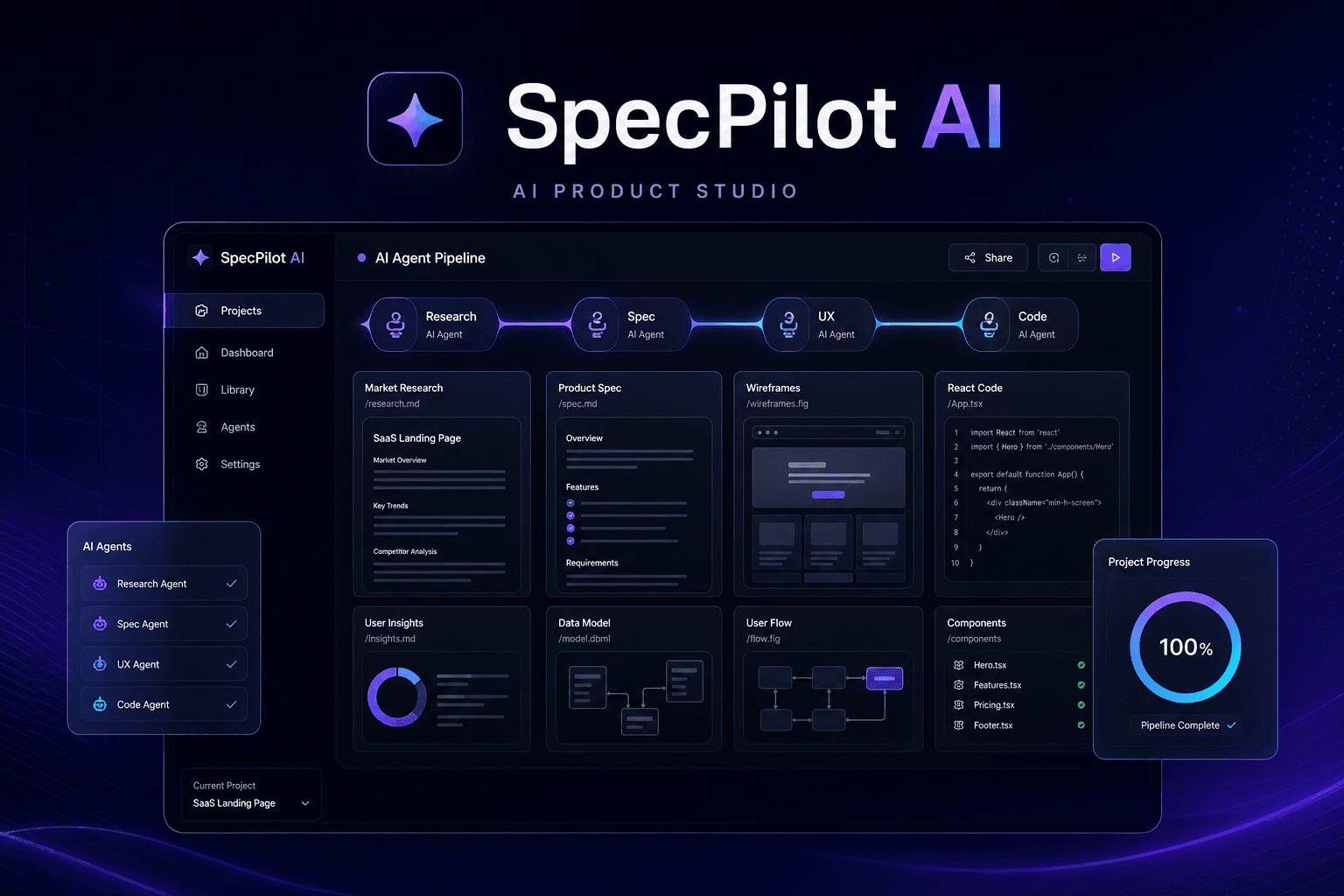
SpecPilot AI helps teams collapse weeks of alignment into hours. Instead of scattered docs and Slack threads, teams work in a single workspace where every AI output is tied to source material and can be regenerated when requirements change.
Problem
Product briefs are vague, design and engineering interpret them differently, and “AI drafts” are often generic with no provenance. Teams waste time rewriting specs and rebuilding UI that missed edge cases.
My role
Led frontend architecture and UX for the core workspace: multimodal upload, streaming agent timeline, diffable spec versions, and export flows. Partnered on prompt design, evaluation rubrics, and API contracts for the agent orchestration layer.
Solution
Built a Next.js app with step-based agents exposed as streaming server events. Implemented a citation model (chunk IDs → highlighted source spans), an eval panel (clarity, completeness, feasibility scores), and a scaffold generator that outputs typed React components and route stubs. Added role-based views so PMs see narratives while engineers get OpenAPI + component trees.OutcomePilot teams reported ~40% faster time from brief to dev-ready spec, with fewer rework cycles because outputs were traceable and versioned. The modular agent UI allowed new steps (accessibility audit, test-case generator) without redesigning the whole product.